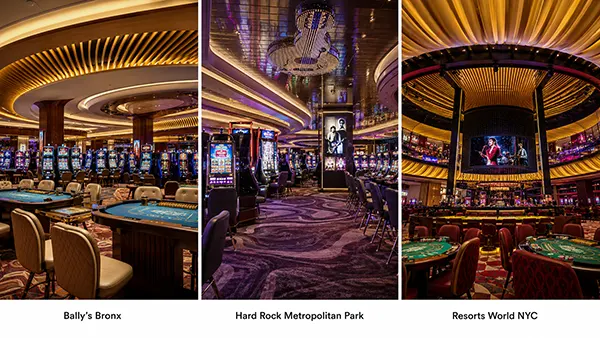
Three New Casinos in New York: Bally’s Bronx, Hard Rock Metropolitan Park and Resorts World NYC After Receiving Licences
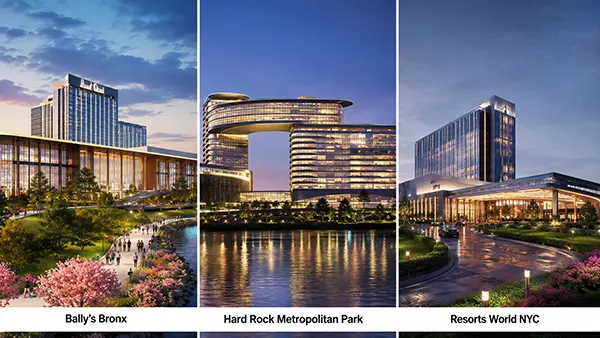
New York City entered a new phase of commercial gambling after the New York State Gaming Commission approved licences for Bally’s Bronx, Hard Rock Metropolitan Park and Resorts World New York City on 15 December 2025. The decision ended a lengthy selection process that had initially attracted eight applications and left three projects in the five boroughs with permission to operate full commercial casinos. Their situations in 2026 are very different, however. Resorts World used its existing Aqueduct property to introduce live dealer games within months and is already operating as a full casino. Bally’s is preparing a major waterfront development in the Bronx, while Hard Rock Metropolitan Park is planned as part of an extensive sports and entertainment district beside Citi Field. For visitors, local residents and businesses, the important story is therefore not simply that three licences were issued, but how each project is progressing, what is actually being built and when the promised facilities are likely to become available.
Bally’s Bronx Brings a Full Commercial Casino to Ferry Point
Bally’s Bronx is planned for Ferry Point in the Throggs Neck area of the eastern Bronx, on part of the property currently occupied by Bally’s Golf Links at Ferry Point. The proposal passed its Community Advisory Committee by a 5-1 vote on 29 September 2025, was selected by the Gaming Facility Location Board on 1 December and received its commercial casino licence two weeks later. The state’s formal evaluation identifies approximately $2.3 billion in qualifying capital investment for the project. This makes Bally’s Bronx smaller in investment terms than Metropolitan Park, but it remains one of the most significant private developments proposed for the borough. Its location also sets it apart from the two Queens casinos: rather than adapting an existing gaming property or redeveloping parking areas around a stadium, Bally’s is creating a new resort beside an established public golf course and the East River waterfront.
The development area covers roughly 18 acres within the wider Ferry Point property. New York City environmental documents completed in 2026 confirm that the gaming facility would occupy land currently used for parking, the existing clubhouse, part of the practice area and landscaped sections near the golf course. Most of the 18-hole course is intended to remain in public use, although some holes need to be adjusted and a replacement clubhouse is planned. Signs of the transition were already visible during 2026. Bally’s own Ferry Point golf information has warned visitors about casino-related construction activity, including closure of the ninth hole and the chipping area. These changes do not mean that the casino itself is close to opening. The schedule assessed during the state licensing process places completion around the middle of 2030, leaving several years of substantial construction work ahead.
The Bronx project also carries employment and neighbourhood commitments that were important during the licence review. Bally’s projected 3,741 new permanent positions, equivalent to roughly 3,500 full-time jobs, and set a goal of filling 70% of construction and operating jobs with Bronx residents. Such numbers should be treated as project commitments rather than guaranteed employment outcomes, because actual staffing will depend on construction progress, the final size of operations and demand after opening. Traffic will be another practical issue. Ferry Point does not have the direct rapid-transit access available at some Queens destinations, and the project includes thousands of parking spaces as well as proposed road, pedestrian and cycling improvements. Once operating, Bally’s will also face a 30% state tax on slot and electronic table-game revenue and 10% on table-game and related gaming revenue under the rates accepted during licensing.
What Bally’s Bronx Is Planned to Include
The casino proposed for Bally’s Bronx is large enough to offer a broad selection of conventional commercial casino games without making gambling the only reason to visit the property. State evaluation documents list 3,500 slot machines, 210 table games and 40 poker tables. The gaming areas are planned across more than one level, with a main casino area and a separate poker room. That mix would give the Bronx its first full commercial casino offering live dealer games alongside electronic gaming. Exact game titles and individual table allocations can change before opening, so the numbers in the licensing documents are better understood as the approved operating plan rather than a permanent catalogue. The several-year gap between licensing and completion also means that equipment, layouts and individual gaming products may be updated before the first customers enter the finished casino.
Outside the gaming areas, Bally’s plans a 507-room hotel, a 2,000-seat event centre, a spa, a nightclub, more than ten food and drink venues and several retail units. Two parking garages are expected to provide approximately 4,661 spaces. The existing Jack Nicklaus-designed golf course is a particularly unusual part of the proposal because it gives the property a major leisure facility that already exists and is known independently of casino gambling. A new clubhouse is included in the development plan, while most of the course is expected to continue operating. This combination of hotel accommodation, events, restaurants, golf and gaming is intended to spread visitor activity across different parts of the site rather than concentrating everyone on a single casino floor.
The main question in 2026 is therefore timing rather than licensing. Bally’s already has the state permission required to operate a commercial casino, and the necessary land-use and environmental processes have advanced far enough for the project to move into development. That does not make a 2030 opening certain. Large projects can be affected by construction schedules, financing decisions, infrastructure work and changes made during detailed design. Visitors should also distinguish the existing Bally’s Golf Links operation from the future casino: the golf course is functioning during the development period, but the full Bally’s Bronx casino resort is not yet open. For local residents, the years before completion will be particularly important because promised road improvements, local recruitment, park-related measures and responsible-gambling safeguards can be judged against the commitments made during the licence process.
Hard Rock Metropolitan Park Plans a New District Beside Citi Field
Hard Rock Metropolitan Park is the largest of the three licensed projects in terms of its wider development concept. It is being developed by Queens Future, a venture connected with Hard Rock International and New York Mets owner Steve Cohen, on land around Citi Field in Willets Point, Queens. Its Community Advisory Committee voted 6-0 to advance the proposal on 30 September 2025, and the Gaming Commission approved its licence on 15 December. The developers have described the entire Metropolitan Park plan as an investment of approximately $8.1 billion. Under the narrower definition used by the state when comparing casino capital expenditure, the Gaming Facility Location Board recorded approximately $5.3 billion in qualifying capital investment. The difference reflects the fact that Metropolitan Park includes extensive public space, transport, parking and other development alongside the casino resort itself.
The state’s assessment placed the projected opening in June 2030. Preparatory work around the Citi Field parking areas was reported during the first part of 2026, although the development remains years away from welcoming casino customers. That timetable matters because the site is considerably more complex than a stand-alone gaming building. The plan covers roughly 50 acres around Citi Field and combines a Hard Rock casino and hotel with entertainment facilities, restaurants, public open space, parking structures and transport improvements. Construction therefore has to be coordinated with a busy part of Queens that already handles Mets games, the US Open tennis tournament and regular traffic through nearby Flushing Meadows-Corona Park. The broader Willets Point area is also undergoing other major development, making access and construction management central issues through the remainder of the decade.
Metropolitan Park received strong support during the formal Community Advisory Committee vote, but that does not mean local opinion is uniform. Some residents and community groups in Flushing and Corona have continued to raise concerns about traffic, pressure on nearby businesses, gambling-related harm and wider changes to surrounding neighbourhoods. Those concerns remain relevant after licensing because a licence authorises the project but does not remove the need to deliver promised mitigation measures. The developers, meanwhile, have committed more than $1 billion to community benefits and infrastructure under the broader development plan. The casino’s approved gaming tax rates are 25% on slot machines and electronic table games and 10% on table games and related gaming revenue. These rates are lower than those applying to Resorts World NYC, one of several important differences between the three licensed operations.
Casino, Hotel, Entertainment and Public Space at Metropolitan Park
Hard Rock Metropolitan Park is planned with the largest initial gaming inventory among the three projects described in the state selection documents. The proposal includes 5,000 slot machines, 375 live dealer tables and 30 poker tables within approximately 286,000 square feet of gaming space. A retail sportsbook and bar are also part of the approved concept. The hotel component consists of two towers with a combined 1,000 rooms, including nearly 400 suites. Entertainment is another major part of the Hard Rock plan: the proposed Hard Rock Live venue is designed for approximately 5,650 people, while the resort is also expected to contain conference and meeting areas, a spa and fitness facilities, retail space and numerous restaurants and bars. These elements explain why the development is presented as a year-round entertainment district rather than simply a casino beside a baseball stadium.
One of Metropolitan Park’s most distinctive commitments is the replacement of large areas of asphalt with approximately 25 acres of public open space. Plans include landscaped areas, paths, community sports fields and playgrounds intended to connect more effectively with Flushing Meadows-Corona Park and the waterfront. The broader community package also includes the Taste of Queens Food Hall, designed to provide space for local food businesses. Transport investment is especially significant because Mets-Willets Point already serves major sporting events. Developers have committed hundreds of millions of dollars to public infrastructure, including work connected with the Mets-Willets Point 7 train station, accessibility and safer pedestrian connections. Large parking structures are still part of the plan, but improving access by rail, walking and cycling is important if the district is to handle casino, hotel, concert and sports visitors on the same days.
For potential casino visitors, Metropolitan Park should therefore be viewed as a future project rather than a current New York gambling option. The licence is in place, the proposed gaming capacity is defined and the development has cleared the central competitive stage, but the target opening remains around 2030. The long construction period gives Hard Rock and its partners time to build a much larger surrounding district, while also creating more opportunities for schedules and individual design elements to change. The most useful figures in 2026 are consequently the ones contained in the approved state evaluation: 5,000 planned slots, 375 table games, 30 poker tables, 1,000 hotel rooms and 25 acres of new public open space. These give a realistic picture of the intended scale without treating every early design detail as permanent.
Resorts World NYC Is Already Operating as a Full Commercial Casino
Resorts World New York City is fundamentally different from Bally’s Bronx and Metropolitan Park because it did not need to create a gaming business from the ground up. Genting has operated Resorts World at Aqueduct in Queens since 2011, initially with video lottery terminals and electronic games rather than the full range of live casino tables permitted at New York’s commercial casinos. Its existing building, workforce, transport connections and hotel gave Resorts World a major advantage once the state approved its commercial casino licence. The Community Advisory Committee unanimously advanced the proposal in September 2025, and the Gaming Commission issued the licence on 15 December. Just over four months later, on 28 April 2026, Resorts World opened its first live dealer gaming floor and became the first full commercial casino operating within New York City.
The April opening introduced 242 live table games together with more than 2,500 commercial slot machines in the existing Aqueduct complex. Blackjack, baccarat, craps and roulette were among the live games made available. Resorts World continued expanding quickly after that first opening. On 21 July 2026, it reopened its first-floor gaming area with another 1,400 slot machines, substantially increasing the number of commercial gaming machines available at the property. The following day, the company formally broke ground on Phase Two of its wider $5.5 billion expansion. This sequence puts Resorts World several years ahead of the other two licence holders in terms of actual casino operations. A visitor in 2026 can already play live dealer games at Aqueduct, while equivalent facilities at Bally’s Bronx and Metropolitan Park remain future developments.
Resorts World also agreed to the highest gaming tax rates among the three New York City licence holders. Its slot and electronic table-game revenue is taxed at 56%, while table games and related gaming revenue are taxed at 30%. Bally’s and Hard Rock accepted considerably lower percentages. For players this does not directly determine the rules of an individual blackjack table or slot machine, but it is important when considering why the state valued Resorts World’s ability to begin full commercial operations quickly. The existing property was already a major gaming business and employer before receiving the new licence, so commercial casino revenue could start flowing without waiting for an entirely new resort to be constructed. At the same time, the present casino represents only part of the final plan. Genting is continuing to build around the existing facility while gaming operations remain open.
How Resorts World NYC Is Expanding Through the Rest of the Decade
The completed Resorts World plan is much larger than the casino that visitors see in 2026. Application materials describe a $5.5 billion expansion intended to bring the property to as many as 6,000 slot machines and 800 gaming tables. The wider resort plan also provides for 2,000 hotel rooms, a 7,000-seat multipurpose arena, more than 30 food and drink outlets, extensive parking and more than a dozen acres of community green space. The casino itself is intended to grow progressively rather than through a single opening day. This approach has allowed Resorts World to generate revenue from live games while new hotel, entertainment and hospitality facilities are still being constructed. The final numbers therefore should not be confused with the inventory already available in 2026: the current casino is operating, but the full build-out remains a multi-year project.
Phase Two, which began construction in July 2026, moves the project beyond simply converting existing gaming floors. Announced elements include an additional 400-room hotel tower, a 7,000-seat arena, a large Crockfords hotel component, a central plaza, new parking infrastructure and the Kenny “The Jet” Sports and Media Complex. When combined with the existing Hyatt Regency and later construction, the long-term plan is designed to reach the proposed total of 2,000 hotel rooms. Resorts World has also said the full expansion will add around two million square feet of new gaming, entertainment, dining, retail and convention space. The timetable in its application envisages the casino reaching its final planned scale before all hotel and resort work is complete, with other parts of the property opening progressively through 2030.
By August 2026, New York therefore has three licensed New York City casino projects but not three newly completed casinos. Resorts World is the only one of the group already operating live dealer games under its commercial licence. Bally’s Bronx remains a major construction project with a mid-2030 opening target, while Hard Rock Metropolitan Park is also planned for completion around 2030. Their locations and designs create very different propositions: Bally’s combines a waterfront resort with an existing golf course, Metropolitan Park links casino gaming with Citi Field, public parks and live entertainment, and Resorts World is expanding a long-established Aqueduct gaming property while remaining open. The next several years will show how closely each operator follows the employment, infrastructure, community and responsible-gambling commitments that helped secure its licence, as well as whether the two new-build projects can meet their current opening schedules.