INSPIRE Entertainment Resort in Incheon: How Casino, K-pop and Korean Tourism Came Together in One Destination
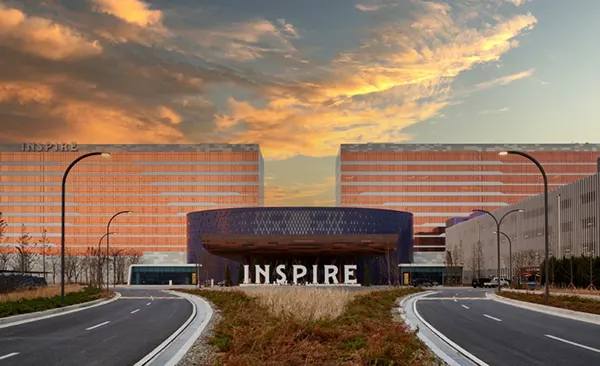
INSPIRE Entertainment Resort on Yeongjong Island is one of the clearest examples of how South Korea is linking entertainment, hospitality and inbound tourism rather than treating them as separate industries. Located beside Incheon International Airport, the resort combines three hotel towers, a foreigners-only casino, a 15,000-capacity indoor arena, convention facilities, an indoor water park, digital art, shopping and dining in one large destination. Its soft opening began in November 2023, the casino opened in February 2024 and the official grand opening followed on 5 March 2024. By 2026, INSPIRE had also become a regular stop for major music and fan events while strengthening ties with travel agencies and international hotel distribution. The result is not simply a casino with extra amenities or a concert venue attached to a hotel. It is a tourism model built around the idea that a visitor may arrive for a K-pop event, stay overnight, eat, shop, use leisure facilities and, if legally eligible and interested, visit the casino without leaving the resort.
INSPIRE’s Place on Incheon’s New Tourism Map
The scale of INSPIRE helps explain why the resort has attracted attention beyond the gaming industry. Its first development phase included 1,275 rooms across the Forest, Sun and Ocean hotel towers, INSPIRE Arena, a large convention centre, the glass-domed Splash Bay water park, the 150-metre Aurora digital entertainment street, restaurants, shops and the casino. The original first-phase investment was about US$1.6 billion, making the project a substantial addition to Yeongjong Island’s tourism infrastructure. South Korea’s Ministry of Culture, Sports and Tourism treated the opening as more than a new gaming venue: when INSPIRE formally opened in March 2024, the ministry explicitly linked the project with the country’s wider ambition to improve cultural tourism and attract international visitors. That broader framing matters because large parts of the resort are designed for guests who have no intention of gambling, including families, concert audiences, business groups and travellers using Incheon Airport.
Location is one of INSPIRE’s strongest practical advantages. The resort sits in the Incheon International Airport area on Yeongjong Island, only a few miles from the terminals, while central Seoul is considerably farther away. In 2026, the hotel’s published transport information includes complimentary shuttle services to Incheon International Airport as well as a circular service linking the resort with Hongdae and Myeongdong. This gives INSPIRE a different role from a conventional Seoul hotel. It can work as the first or final stop of a Korean trip, an overnight base for an arena event, or a short resort stay before an international flight. That same location also makes it easier to market concert, convention and casino packages to overseas visitors arriving from nearby Asian markets. For travellers whose main priority is daily sightseeing in central Seoul, however, the distance means that staying at INSPIRE for an entire city-focused holiday will not always be the most efficient choice.
The resort’s corporate story also changed after opening, and that is important for any article claiming to be current in 2026. INSPIRE was developed by Mohegan, but affiliates of Bain Capital took effective ownership and control of the parent structure in February 2025 after enforcing rights connected with a term loan. Mohegan subsequently stated that it no longer held an equity interest in INSPIRE, and the property dropped the “Mohegan” name to trade as INSPIRE Entertainment Resort. Operations continued, and the hotel side gained another international connection in late 2025 through an agreement with Hilton. The property now appears as INSPIRE Entertainment Resort, A Hilton Partner Hotel, while INSPIRE continues to manage the resort. Participation in Hilton Honors and access through Hilton booking channels broaden its reach to overseas travellers without changing the basic identity of the complex as a Korean integrated resort in Incheon.
Why the Casino Matters Without Defining the Whole Resort
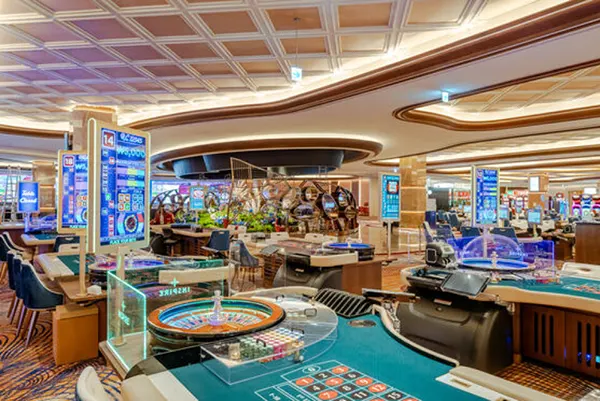
The casino is commercially important, but Korean law sharply defines who can use it. INSPIRE Casino received final approval from the Ministry of Culture, Sports and Tourism in January 2024 and opened on 3 February that year. It was the first new foreigners-only casino licence approved in South Korea in 19 years and the first such approval for a foreign investor under the relevant free economic zone framework. At opening, the gaming area was presented with about 150 tables, roughly 390 slot machines and a 160-seat electronic table game area across two floors. The casino includes familiar games such as baccarat, blackjack and roulette, but its significance for Korean tourism is less about the individual game list than about the customer group it is allowed to serve. With the exception of Kangwon Land, South Korean casinos are generally restricted to foreign visitors, so INSPIRE’s casino is aimed at international tourism rather than the domestic mass market.
For an overseas visitor, the rule is straightforward in practical terms: access to INSPIRE Casino is for foreign nationals who meet the legal age requirement, and a passport is needed for identity and nationality checks. The resort’s own visitor guidance states that people under 19 cannot enter. The casino operates separately from the family and entertainment areas, which means a concert guest, hotel resident or visitor to Aurora can use the rest of the resort without entering a gaming floor. That separation is one reason INSPIRE should not be described simply as a casino hotel. A family can spend time at Splash Bay, digital attractions and restaurants, while an adult international guest may choose the casino as one part of the same stay. For anyone who does gamble, the usual financial caution applies: casino games are paid entertainment with a mathematical house advantage, not a reliable way to make money.
From the resort’s business perspective, the casino still plays a special role because international gaming customers can have higher on-site spending than ordinary day visitors, particularly when accommodation, dining and private services are added to the trip. INSPIRE’s 2026 tourism outreach shows that management continues to connect casino demand with the wider inbound travel trade. At its Inbound Business Connect 2026 event, held with the Korea Association of Travel Agents, the resort presented international visitor strategies and partnership opportunities, including incentive programmes connected with its casino team. This is a useful example of how gaming and tourism are being combined in practice: the casino is not marketed in isolation from the rest of the property but as one possible component of a broader itinerary. At the same time, the foreigners-only rule limits the casino’s domestic customer base, so concerts, hotels, conventions, food, retail and attractions remain essential to keeping the destination relevant to Korean residents as well.
INSPIRE Arena Turned K-pop into a Travel Driver
INSPIRE Arena is the part of the resort that most clearly links Korean popular culture with international travel. The indoor venue can hold up to 15,000 people in its largest configuration and was built specifically for large-scale live entertainment rather than converted from a sports hall. That distinction has practical value for concert production, but it also has a tourism effect: fans can attend a show and stay within the same resort complex instead of travelling back across the Seoul metropolitan area late at night. The arena became active almost immediately after the resort’s soft opening. The 2023 Melon Music Awards took place there in December 2023, and Taemin held his METAMORPH solo concerts at the venue later that month. Those early events established a pattern that continued through 2024, 2025 and 2026, with Korean and international artists, fan meetings, award shows, sports events and esports using the arena.
By 2026, INSPIRE Arena was no longer a novelty venue testing its first calendar. It had become part of the regular circuit for major Korean entertainment events. LE SSERAFIM scheduled its PUREFLOW tour dates at the arena for 11 and 12 July 2026, while other 2026 programmes included K-pop concerts and fan events across the year. The venue also hosted the T1 Home Ground esports event in April, with NMIXX performing as part of the associated Eve Festa. This mixture is significant because the audience for Korean popular culture is broader than a single music genre: K-pop fandom, esports, television-linked events and fan conventions often overlap, especially among younger international visitors. INSPIRE can therefore attract people whose primary reason for coming is an event rather than a hotel stay or casino visit, then convert part of that event traffic into dining, accommodation and other spending on site.
The resort has also been developing the hospitality side of the arena experience. In 2026, INSPIRE Arena had 25 skyboxes across its second and third levels, with capacities ranging from 12 to 35 people depending on the room. These spaces show how the venue is being used not only for standard ticket sales but also for corporate hosting and premium group experiences. More broadly, the arena’s relationship with the three hotel towers reduces one of the common problems around large concerts: thousands of people leaving the same venue and travelling long distances at the same time. Staying on site is not necessary, and many fans will still return to Seoul or elsewhere in Incheon, but the option changes the economics of the event. A two-hour concert can become a one-night or two-night visit that includes meals, shopping, leisure facilities and airport transfers, which is exactly the type of extended spending that tourism authorities and resort operators seek from major cultural events.
Aurora, Le Space and Splash Bay Extend the Visit Beyond the Show
INSPIRE’s non-gaming attractions are central to the way the resort turns a single event into a longer visit. Aurora, the indoor digital entertainment street, runs for about 150 metres and uses large LED surfaces across the walls and ceiling to create scheduled visual sequences. Nearby, the Rotunda uses a kinetic chandelier made from moving LED panels as another large-scale media-art feature. These areas are not minor decorations hidden inside a hotel lobby; they function as public attractions that draw day visitors, social-media traffic and people waiting before or after arena events. Their role is especially useful in a resort beside an airport, where guests may have several hours between check-out, flights or evening performances. They also give domestic visitors a reason to visit INSPIRE even though most Korean citizens cannot enter the casino.
Le Space adds a ticketed digital-art attraction, while Splash Bay provides a different kind of stay: an indoor water park beneath a glass dome that can be used without relying on good outdoor weather. The wider property also includes wellness facilities, an outdoor entertainment park, shops, restaurants, cafés and spaces for meetings and conventions. This mix is deliberate. A K-pop fan may spend the afternoon at Aurora or Le Space before a concert; a family may build a weekend around the hotel and water park; a business group may use the convention facilities and restaurants; and an international adult guest may add the casino later in the evening. The individual attractions are different, but they share the same commercial logic: giving people enough to do in one location that a short visit can become a full day or overnight stay.
This is also where INSPIRE differs from a traditional urban concert venue. A city arena benefits nearby hotels, restaurants and shops, but those businesses are usually spread across different owners and neighbourhoods. At INSPIRE, much of the visitor journey is concentrated inside one resort environment. That concentration can be convenient, particularly in winter, during bad weather or for travellers carrying luggage, but it also means visitors should plan their time and budget rather than assume every attraction is included with a hotel booking or concert ticket. Access conditions and opening hours vary between facilities, and ticketed attractions may require separate reservations. For travellers mainly interested in Korean street life, independent restaurants and historic neighbourhoods, central Seoul still offers a very different experience. INSPIRE works best when its own entertainment schedule and resort facilities are genuinely part of the reason for the trip, rather than simply being treated as a substitute for the city.
How INSPIRE Fits Korea’s 2026 Inbound Tourism Strategy
The resort’s combination of K-pop, hospitality and gaming makes more sense when viewed against South Korea’s wider tourism policy. Korean authorities increasingly treat major cultural events as travel drivers rather than entertainment consumed only by local audiences. In April 2026, the Ministry of Culture, Sports and Tourism published research on international visitors attending BTS events in Gwanghwamun and Goyang. The surveyed overseas concertgoers stayed in Korea for an average of 8.7 days and spent KRW 3.53 million per person, demonstrating how a performance can influence accommodation, food, shopping and regional travel well beyond the concert itself. Those figures were not specific to INSPIRE, but they illustrate the same economic logic behind placing a major arena inside a resort beside the country’s principal international air gateway. When a music event motivates the journey, hotels and attractions can turn cultural interest into a broader tourism stay.
INSPIRE has been actively trying to secure a larger share of that inbound demand. In July 2026, around 250 representatives from travel agencies and tourism organisations attended Inbound Business Connect 2026 at the resort, an event organised with the Korea Association of Travel Agents to discuss international visitor acquisition and industry partnerships. The 2025 Hilton agreement added another route to global customers by placing the 1,275-room hotel within Hilton’s reservation and loyalty network. At the same time, the resort’s location supports short itineraries from Japan, China and other nearby markets, while its arena can create a fixed date around which visitors build the rest of a Korean trip. None of this guarantees commercial success, but it shows that INSPIRE’s tourism strategy in 2026 is broader than filling casino tables: the aim is to attract international guests through several independent reasons to travel and then keep more of their time on site.
The financial history of the resort is a useful reminder that large integrated resorts carry real commercial risk. Despite the size of the investment and the attention generated by its opening, INSPIRE’s early financial performance did not meet all of the expectations attached to its financing, leading to the 2025 control change from Mohegan to Bain Capital affiliates. That development does not mean the resort stopped operating; in fact, INSPIRE continued to expand partnerships, appoint new leadership and host major events. It does show why the combination of casino, K-pop, conventions, hotels and leisure attractions is more than a branding exercise. A foreigners-only casino cannot depend on domestic gaming demand, an arena is busy only when events are booked, and hotel occupancy changes with seasons and travel patterns. The long-term case for INSPIRE therefore depends on how effectively those different businesses support one another and how consistently the resort can draw visitors from outside Korea as well as non-gaming guests from within the country.
What Visitors Should Know Before Planning a 2026 Stay
For a 2026 trip, the most useful starting point is the event calendar rather than the casino. If the main reason for visiting is a concert, fan meeting or esports event, booking accommodation and transport around the confirmed show dates can reduce late-night travel after the event. INSPIRE publishes transport information, and Hilton lists complimentary airport and local shuttle services, but timetables can change and seats are generally provided on a first-come, first-served basis. Travellers arriving through Incheon International Airport can reach the resort quickly compared with central Seoul, while visitors coming from Seoul should allow more time, especially on busy event days. A stay at INSPIRE is therefore particularly practical at the beginning or end of a Korean journey, or when the arena itself is the main purpose of the visit.
Casino visitors need to plan differently from ordinary resort guests. INSPIRE Casino is restricted to eligible foreign nationals, and a passport is required for entry checks; people under 19 are not admitted. Korean citizens cannot use the casino under the ordinary rules that apply to INSPIRE, so the gaming area should never be presented as an attraction available to every resort visitor. Anyone intending to play should also set a fixed entertainment budget and avoid treating losses as money that must be recovered. For everyone else, there is no need to enter the casino at all: the arena, Aurora, Le Space, Splash Bay, restaurants, shops, hotel facilities and event spaces form a separate visitor experience. That distinction is especially important for families and K-pop travellers who may choose INSPIRE entirely for entertainment, accommodation or convenience near the airport.
INSPIRE’s importance in Korean tourism comes from the way these different reasons for travel meet in one place. The casino gives the resort a specialised international gaming business; the arena connects it directly with K-pop and other live-event audiences; the hotel and leisure facilities turn short visits into longer stays; and the airport location makes the destination unusually accessible to overseas arrivals. The model is still relatively young, and the 2025 change in control shows that its commercial development has not been simple. Yet by 2026 the resort is functioning as more than the sum of its original components: it is simultaneously a concert venue, hotel complex, family leisure destination, convention site and foreigners-only casino. For travellers, the value lies in deciding which of those elements genuinely fits the trip. For Korean tourism, the more important test is whether INSPIRE can keep converting cultural demand and air connectivity into repeat international visits over the years ahead.